
Another July Edition of KLM Spatial’s Industry Updates.
10-year Plan for Industrial Land Update
Planning Institute of Australia member briefing, 11 July 2025.
PIA recently arranged for DTP to provide members with a progress update on the Government’s 10-year plan for industrial land.
DTP are aware demand for shovel ready land is high, particularly in SE Metro
The Urban Development Program is tracking land status changes, including industrial (but is currently ‘inactive’, potentially due to budgetary constraints)
On 30 June 2025 a Greenfield Subdivision Concierge Service was launched:
• Available for developers and councils
• Employment as well as residential land
• RAs do not change, this is a mediation service
• Metro PSP gazetted growth area subdivisions
• Min. 2ha employment land or investment case based / 100 lot residential subdivision
• Matters that have unreasonably been delayed for 6+ months
• Solution must not be provision of new state transport infrastructure
Priorities remain Avalon, Parwan, Bendigo (VPA & DTP)
Rezoning of Special Use Zone in Altona in partnership with Hobsons Bay
Review of restrictive Special Use Zoning in Hastings top open up opportunities
Development Victoria is involved in delivering the Ballarat West Employment Zone (155 ha)
Dedicated regional support team, with $10 million trunk infrastructure grants available via Regional Development Victoria
Exemplar case study is the Pivot City District (Geelong Council & Hamilton Group), which now employs more staff (1200+) than the former Federal Woollen Mill and automotive glass factory.
Industry feedback to DTP is demand driver is for co-location and diverse uses (e.g. services, retail, hospitality with traditional) in both new and existing precincts.
Planners feedback is to create higher quality visitor and worker friendly environments through leading urban design, landscaping, recreation and open space provision.
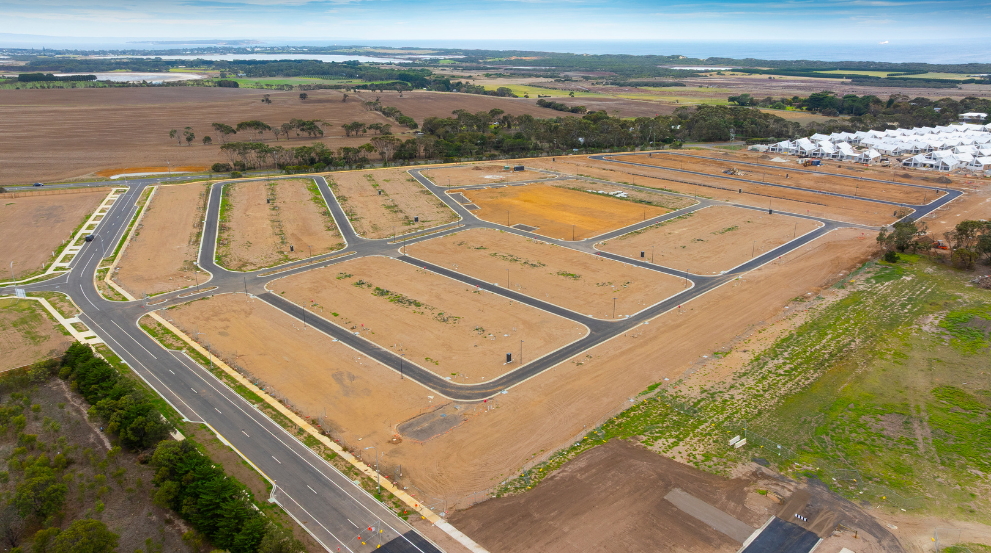
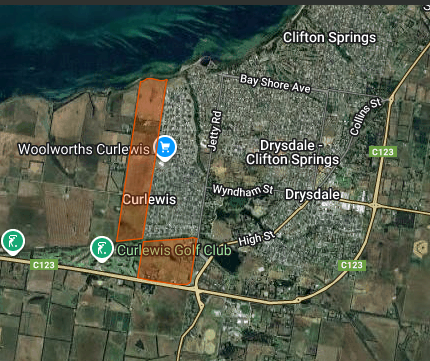
Geelong Jetty Road S2 PSP approved
Amendment C387 – Jetty Road Urban Growth Area Stage 2 – City of Greater Geelong
• Prime development land halfway between Geelong and Port Arlington
• 150 ha, 1600 lots, primarily General Residential Zone
• Approved 3 years from Council adoption and 18 months from Exhibition
• Developers include: National Pacific Properties / Burbank Group, L. Bisinella Developments P/L (Moremac are no longer active there)
• For the first time in 3 years, Geelong topped 100 greenfield lot sales for May.
State of the Housing System 2025
State of the Housing System 2025 | NHSAC
Planning Institute of Australia member briefing, 16 July 2025.
PIA provided members with a briefing from Marcus Spiller, Deputy Chair of the National Housing Supply and Affordability Council, on their recent data Report.
Key findings
• Dwelling and rent price growth slowed in 2024 compared to 2023
• However it still outpaces median household income growth. 50% of median household income is now needed to service the average new mortgage
• The average time required to save for a home deposit increased to 10.6 years, and the ratio of dwelling prices to median household income rose to 8.0
• The Council is forecasting affordability broadly to stabilise over the next 4 years and rent growth to slow roughly inline with inflation
• The supply of new housing is near its lowest level in a decade. 177,000 dwellings were completed in 2024, falling significantly short of underlying demand for housing in 2024 (estimated at ~223,000)
• Demographic factors (i.e. declining immigration, lower fertility rates and higher life expectancy) suggest new demand for housing is expected to slow, falling from ~205,000 next year and ~175,000 the following year
• At the same time, the supply of social and affordable housing is expected to accelerate
• 938,000 dwellings are forecast to be completed during the Housing Accord period, which falls short of the 1.2 million target. When factoring in demolitions, the net new supply is expected to total 825,000
• Detached housing is expected to constitute just under two-thirds of new supply over the Housing Accord period
• Poor project feasibility and ongoing delays for approvals is expected to impact supply of medium- and higher-density dwellings
• Cyclical constraints to supply – elevated material costs, labour shortages and high financing costs – are easing but remain a headwind to supply
• Structural constraints are the principal barrier to supply. These include an inadequate pipeline of skilled workers; scarce, fragmented and costly land suitable for development; low rates of productivity and innovation in the construction sector; restrictive and complex land use and planning approval systems; market frictions and financial incentives that limit the optimal use of the existing housing stock; and a fragmented housing policy and regulatory ecosystem that adds to costs, timeframes and risks.
The Council’s 5 key policy priorities
- Increase investment in social and affordable housing through proven
mechanisms, and review regulatory frameworks for the social and
affordable housing sector. - Improve construction sector capacity and productivity
- Apply best practice principles to planning systems and make more land
available. - Support better outcomes for renters.
- Ensure the tax system supports housing supply and affordability.
(Editor’s note: the broad experience on this Council commands respect for whatthey advocate for. However it is hard to strike a balance between ‘affordability’ and ‘supply’ when recommendations include to substantially increase the cost burden for home buyers e.g. via mandatory inclusionary zoning, infrastructure and open space contributions, annual land tax).
Medium Density Housing approved in 10 days for $1
Revolutionary Housing Designs: Approve in 10 Days for $1
In a bold move to address the housing affordability crisis in New South Wales, the Minns Labor Government has launched the much- anticipated NSW Housing Pattern Book, a collection of low-rise home designs that
can now be approved in just 10 days.
The initiative is part of the government’s broader efforts to speed up the delivery of new homes, significantly cutting costs and eliminating common delays faced by builders. As part of the new strategy, the NSW Housing Pattern Book features a
selection of terrace, townhouse, and manor house designs that cater to families, young people, and downsizers. The designs are endorsed by the NSW Government Architect and valued at up to $20,000.
Key Features of the NSW Housing Pattern Book
- Eight designs for terraces, townhouses, and manor houses
- $1 per pattern for the first six months
- Complimentary Landscape Pattern with each purchase
- Ten-day approval process for fast-tracked construction
- Affordable, sustainable, and adaptable designs
(Editor’s note: with multiple applications already underway, the program appears to be a significant improvement on Victoria’s ‘Future Homes’ (virtually zero take up). The “10-day decision” is similar to VicSmart in that Council is the authority and they can pause the application via a RFI).
Victorian Building Activity, March 2025
New data from the ABS and released by the PCA, shows that 14,266 dwellings were completed during this quarter, up 231 completions in the last quarter, yet still short of the national goal set for Victoria of 15,392. Meanwhile, work on 15,503 dwellings commenced in the last quarter, up 3200 from the last quarter (Christmas slow down) and 1166 from 12 months ago.
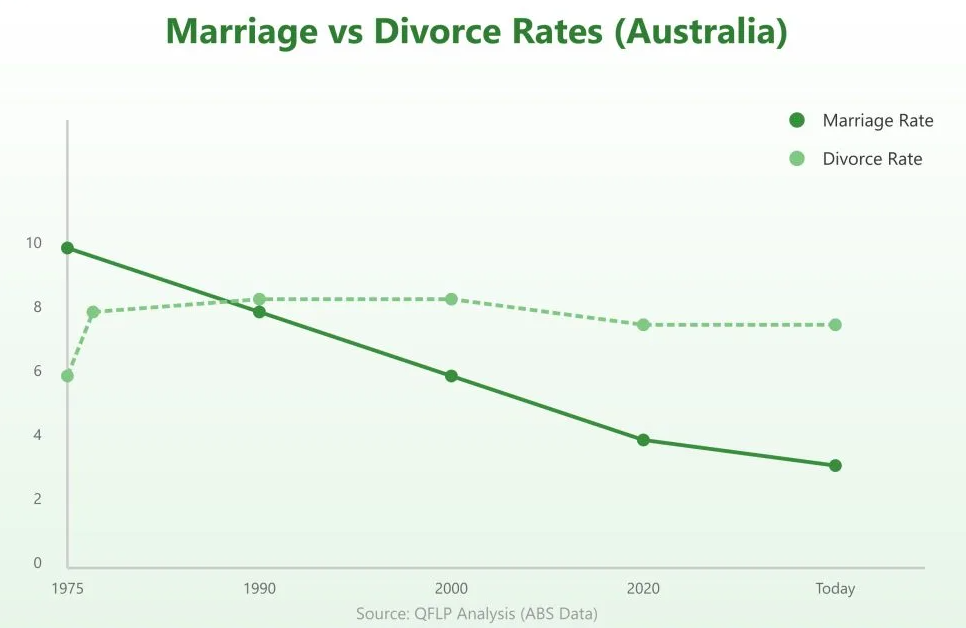
Get married to buy a house? It’s more like avoiding divorce to keep one
The rate of divorce in Australia has fallen to its lowest levels since the mid-1970s. In 2023, there were 2.3 divorces for every 1,000 residents compared to 6.3 in 1976. More recently getting squeezed by the cost-of-living crunch and in the midst of a housing crisis, research suggests more couples with their differences are staying together in a home they own. Buying or renting most properties is becoming out of reach for average Australians, particularly in the case of single income serviceability for a loan.