
Welcome to the December Edition of KLM Spatial’s Industry Update.
Inquiry into the supply of regional homes Supply of homes in regional Victoria
The Victorian Parliament’s Inquiry into the Supply of Homes in Regional Victoria highlights a widening gap between housing demand and supply across regional communities.
Population growth, migration from Melbourne, and smaller household sizes are driving demand, particularly for smaller, affordable homes near services. However, new housing supply is constrained by limited serviced land, slow infrastructure delivery, high construction costs, and skills shortages.
This mismatch has led to rising property prices (up 40–50% in five years), declining home ownership, and extremely low rental vacancy rates, intensifying housing stress. The report finds that vulnerable groups—young people, Aboriginal Victorians, older residents, people with disability, lower socio-economic migrants, and those experiencing family violence—are disproportionately affected.
Many face homelessness or insecure housing due to affordability barriers and systemic discrimination. Social housing demand is rising faster than supply, despite the government’s Big Housing Build initiative.
There are 23 recommendations, including:
- Establishing regional taskforces to integrate housing and infrastructure planning
- Setting new social housing targets tailored to vulnerable groups
- Incentivizing higher-density and diverse housing forms
- Expanding inclusionary zoning for mandatory social and affordable housing
- Strengthening the construction workforce
- Setting a 10-year plan for regional greenfield areas
- Windfall gains tax (WGT) reform.
The report stresses that sustained investment in social housing and collaborative planning are essential to ensure regional Victoria remains affordable, inclusive, and resilient. The Victorian Government is encouraged to consider refining the WGT to ensure it incentivises residential development in regional Victoria.
This could include:
- Introducing exemptions for higher density development within existing urban areas of regional cities or for social housing
- Requiring the proceeds to be invested back into the communities where they were collected (yes that’s right, WGT is a consolidated revenue tax)
- Reducing the WGT interest rate/payments in line with the proportion of social or affordable housing to be developed.
Industry has called for a 10-year plan for regional greenfield areas, like what was announced for the metropolitan area. Regional greenfields are in the urban fringe (akin to infill), with efficiencies in connecting to established infrastructure, accommodating volume housing construction and fulfilling homebuyer preferences (i.e. house and land packages).
UDIA Residential Subdivision Award – Alira by Moremac
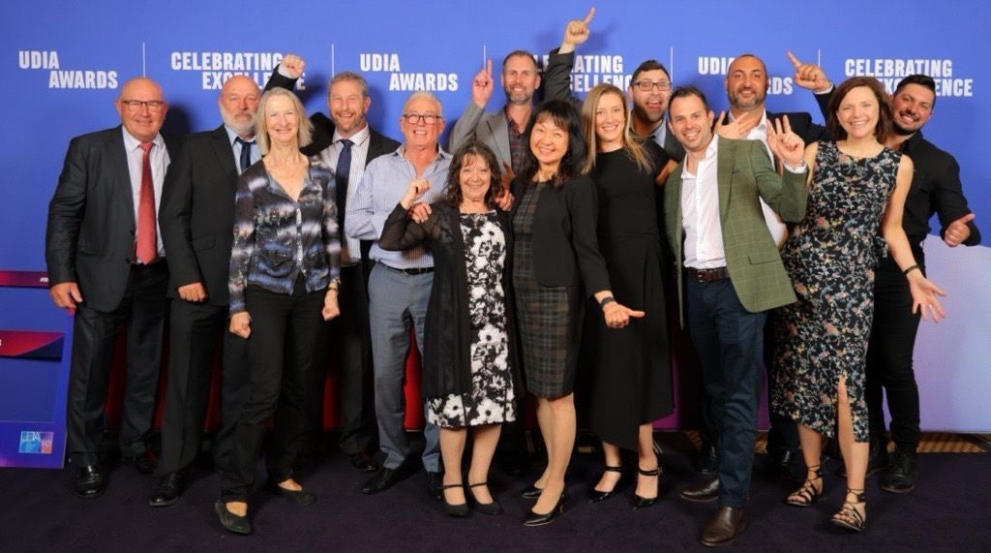
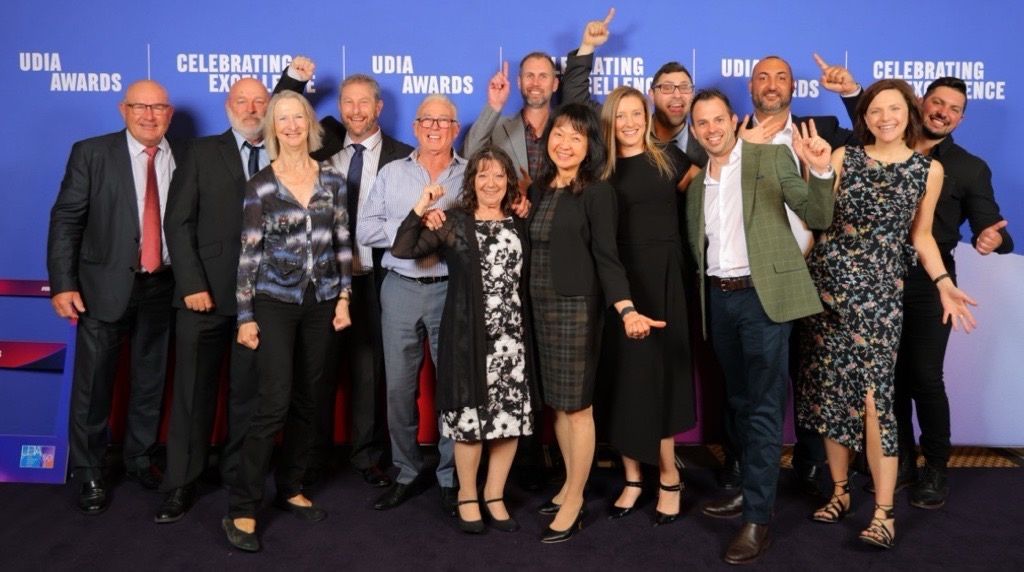
At the UDIA Awards event last Friday, Moremac took home the 2025 Victorian Residential Subdivision Award. Moremac thanked all consultant partners for their contribution, including KLM Spatial. Several staff members including our oldest founding member to newest graduate were on hand to enjoy the celebrations. Congratulations to Lifestyle Communities Cowes for their award too, another KLM project.
VicGrid Renewable Energy Zone consultation
Renewable energy zone orders | Engage Victoria
The Victorian Government is consulting on draft Renewable Energy Zone (REZ) orders, which identify areas best suited for coordinated renewable energy development. These zones are designed to host new solar, wind, and battery projects with the most efficient connections to the transmission network, ensuring reliable and affordable power as coal generation phases out. The consultation follows 18 months of technical work and community engagement led by VicGrid and feedback will inform the final declaration of zones.
Five onshore REZs are proposed: Western, Central Highlands, Gippsland, North West, and South West. In addition, a Gippsland Shoreline REZ is proposed to manage infrastructure such as underground cables linking offshore wind farms to the grid. Draft orders outline maps, transmission projects, hosting capacity and requirements for developers to meet government expectations on community engagement, social value, and economic benefits.
Zone boundaries are not yet finalised and will align with existing formal features like roads or local government areas. Importantly, landholders retain the right to decide whether to host projects. The estimated cost of connecting Victoria’s renewable energy zones has nearly doubled to almost $8 billion.
Submissions are open until 22 February 2026, with feedback shaping final orders and the 2027 Victorian Transmission Plan. Once declared, REZs will guide renewable energy investment, minimise impacts and deliver long-term economic and environmental benefits.
Factors in consideration of designing the zones are: access to strong winds or sunshine that could produce renewable energy, access to existing or planned transmission infrastructure, if farming in the area could potentially co-exist with renewable projects, impacts on the environment and biodiversity, impacts on local communities and Traditional Owners, regional development opportunities and interest from renewable energy project developers.
See the draft renewable energy zones via this interactive map.
ore planning reforms announced – Activity Centre Infrastructure Contributions
From July 2027, the ‘infill’ infrastructure contributions system, which was established to apply to the initial 10 pilot Activity Centres, will be expanded to the additional 50 Train and Tram Zone Activity Centres.
Under the system, developers will pay a standardised contribution of:
- $11,350 for each standard dwelling.
- $114 for each additional sqm of commercial leasable floor area over 100 sqm.
- $57 for each net additional sqm of industrial leasable floor area over 200 sqm.
Contributions will be collected by council and payment will be triggered at the earlier of the issue of a certificate of occupancy or a subdivision statement of compliance. It is mandated that the majority of the contributions are spent in the same LGA. The program is expected to generate $4 billion in revenue by 2051. Property taxes accounted for around 44 per cent of all state tax revenue in 2024-25, while Australia’s housing stock has roughly doubled in value since 2009 to $11.9 trillion.
Reduction to transit oriented development car parking rates (i.e. Clause 52.06)
The Victorian government is set to overhaul ‘outdated’ car parking rules for new residential developments in areas that are well-serviced by the principal public transport network (PPTN).
Premier Jacinta Allan said the requirements failed to reflect the development of the PPTN since they were imposed decades ago. The Premier suggests 40 per cent of private inner car parking spaces are not being used. The changes will be implemented by a future VC amendment.
The general consensus is this not only helps to free up land for more apartments, but construction costs are lower which can be passed on in savings to home buyers. GTA consultants testified to this in the preparation of the Car Parking Overlay for the Arden PSP, estimating basement parking to cost $45- $75K per space (~2021 dollars). But would you buy an apartment without a car parking space?
Information in these stories is from multiple sources i.e. UDIA, ABC News and the Premier’s Office.
Freight rail investment is the future as one in 12 road transport operators are closing
Latest data says one in 12 road transport operators have closed in the past year
Recent figures reveal that one in 12 of road transport operators shut down in the past 12 months, highlighting the fragility of the sector. The closures are attributed to soaring fuel prices, insurance premiums, maintenance costs, and compliance burdens, which have eroded profitability.
Smaller operators, often family-run businesses, are particularly vulnerable because they lack the financial resilience of larger fleets. Industry groups warn that the trend could have serious consequences for supply chains in the short-medium term, especially in regional areas where independent operators play a crucial role in moving goods.
This is on top of a significant exodus of family run operators that sold second hand trucks at peak prices during the Pandemic, while also being hit with increased regulation.
While demand for freight remains strong, the cost of doing business has outpaced revenue growth, leaving many companies unable to sustain operations. The data underscores concerns about driver shortages and the difficulty of attracting younger workers to the industry. With closures accelerating, there are fears of reduced competition, higher freight costs, and increased pressure on the remaining operators.
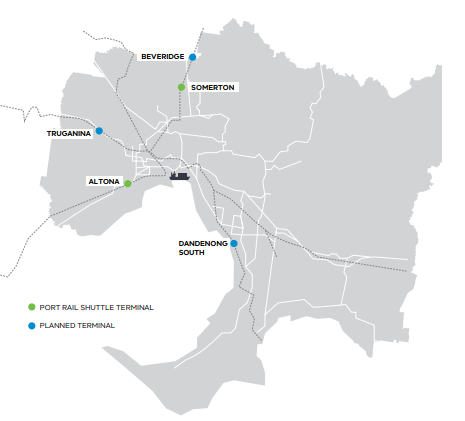
Victoria is seeing significant investment in freight infrastructure, including an intermodal rail terminal network between the Port of Melbourne, Altona, Somerton, Lyndhurst (and potentially the Port of Hastings) under construction. Plan for Victoria also includes a proposed airport in Cardinia Shire.
Stand-alone legislation for the industrial hemp industry
Stand-alone legislation for Victoria’s industrial hemp industry | Engage Victoria The Victorian
Government has consulted on stand-alone legislation for industrial hemp, moving regulation away from the Drugs, Poisons and Controlled Substances Act 1981.
Industrial hemp contains less than 1% THC and is valued for its fast growth, carbon sequestration, and wide uses in building materials, packaging, textiles, biofuels, cosmetics, and food products.
Having stand-alone legislation tailored to the specific needs of industrial hemp industry and farmers will also better support industry growth and unlock regional jobs and investment.
The consultation sought feedback on priorities for cultivation, processing, supply, and sale to create a fit-for-purpose framework that supports industry growth while ensuring safeguards. Submissions recently closed, with feedback to inform draft legislation to be tabled in 2026.
SRO News and Updates Important updates from the State Revenue Office
- Notifications for vacant residential land tax (VRLT) are due by 15 February 2026 and the absentee owner surcharge are due by 15 January 2026.
- VRLT applies to residential land across all of Victoria if it is vacant for more than 6 months in the preceding calendar year. From 1 January 2026, VRLT is extending to land in metropolitan Melbourne that has remained undeveloped for a continuous period of 5 years or more.
- The State Taxation Further Amendment Act 2025 has received Royal Assent, including:
- Changes to congestion levy rates and an expansion of the Category 2 area
- New land tax and vacant residential land tax exemptions
- Changes for New Zealand citizens in relation to foreign purchaser additional duty, the absentee owner surcharge and First Home Owner Grant.
- The SRO is consulting on a new draft ruling which explains when a purchaser’s payment of a vendor’s tax liability will be subject to duty on the basis that it forms part of the consideration for the transfer of land. The current exemptions do not change. Open until 24 December.
Victorian Greenfield Market Report Q3 – RPM Data
- Pick up in demand for school sites
- $100K income households are increasing demand for townhouses (~$575K price) Investor interest is also rising
- Melbourne and Geelong Q3 was the highest sales for 3 years, but increase in interest is only moderate
- Regional market interest is also picking up, where there is a clear affordability advantage (including Warragul and Drouin)
- The median established house price is up 4.5% for the year (still 15% below 2021 peak) with FOMO having kicked in again
- FHB normally account for 20% of all sales, but October uptake of the ‘5% deposit scheme’ only applied to 10% of transactions • Cancellations are slowing underpinned by healthy employment levels, but settlement days are rising
- Prices of 350 sqm lots are as high as $529K in Cranbourne West, $351K in Mambourin and as low as $309K in the Bellarine. If buyer momentum continues to rise, there will be no 350 sqm lots in SEM under $400K.
South East Metro and Regional
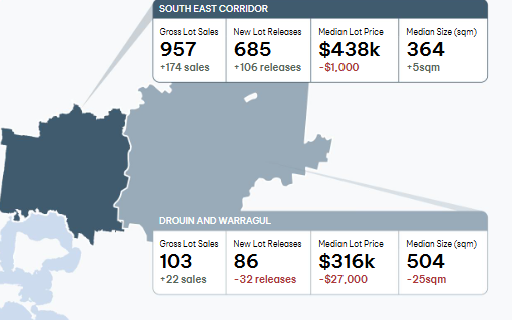
- Sales in SEM (957) surged 22% in Q3, predominantly in Cardinia. This eclipsed the 10- year average of sub-900 and lead 6/7 quarterly rises. New supply also increased 18%
- It was a similar story for Drouin and Warragul with 103 sales up 39% and eclipsing the 10-year average of 90. Stock on hand is sitting at ~384 lots
- Drouin and Warragul introduced price drops of 8% for the quarter and 1-2% for the year to boost sales, with the median lot size also falling
New employment land projects on consultation
Greater Avalon Employment Precinct | Engage Victoria
Bendigo Regional Employment Precinct | Engage Victoria
Ballarat West Employment Zone – Development Victoria
Greater Avalon and Bendigo Regional Employment Precincts are now on public consultation, as the Government spruiks its 10-year plan for industrial land. Avalon closes on 11 December and Bendigo on 13 February. Lots have started selling in the Ballarat West Employment Zone, a 400 ha site delivered in partnership by Development Victoria, Regional Development Victoria and Ballarat City Council.
Victorian Climate Change Strategy Update – Victoria’s Climate Change Strategy 2026-30
Victoria is striving to be a global leader in emissions reductions by 2035. While Finland is targeting net zero, Victoria and Scotland are targeting 80% reductions to the 2005 baseline. This includes:
- Earliest net zero emissions target of any major jurisdiction in Australia
- First jurisdiction in Australia to set a 2035 target
- Nation-leading minimum energy standards for renters
- Biggest energy storing targets
- Brought back the SEC with a $1 billion initial investment
- First Gas Substitution Road Map in the nation
- Reduced emissions intensity 50% faster than the national average since 2014. Sector emissions cutting initiatives include:
- Reliable renewables to replace fossil fuels, increasing to 95% generation by 2035. This is backed by large scale storage and a planning system that facilitates fast approvals.
- Alternatives to polluting vehicles for the $36 billion transport system, with investment in rail and low emission vehicles technology
- Support for the $20 billion p.a. / 150,000 job agricultural sector through research and commercialisation of new technologies
- Building a thriving circular economy and reducing methane released from landfills
- Encouraging new housing in the 60 Activity Centres, supported by major public transport (another nail in the coffin for greenfield expansion?)
- Continuing to plant millions of trees across private and public land and restoring the environment, including the $120 million Gippsland Plantations Investment Program
Victorian Energy Emission Targets – Victorian Greenhouse Gas Emissions Report, 2023
Victoria leads the nation in climate action. It has set some of the most ambitious climate targets in the world: net zero emissions by 2045 and strong interim targets along the way – 28–33% below 2005 levels by 2025, 45–50% by 2030, and 75–80% by 2035.
Between 2005 and 2023, while Victoria’s greenhouse emissions fell by 31.4%, the state economy grew by 57.5% (Editor’s note: a state capital works pipeline of $213 billion would be a significant contributor to this growth).Victoria is leading the nation’s renewable energy targets: 65% renewable energy by 2030 and 95% by 2035 and energy storage targets of 2.6 gigawatts (GW) by 2030, and 6.3 GW by 2035.
The State Electricity Commission (SEC) has been brought back to lead the transition to renewable energy and along with Solar Victoria, helping families upgrade home appliances to efficient electric energy.
The sources of Victorian’s emissions are lead by (coal powered) electricity generation (46%), transport emissions (26%), agriculture (18%) and fuel combustion (17%). 18% (rising) is being offset by land use change and forestry.
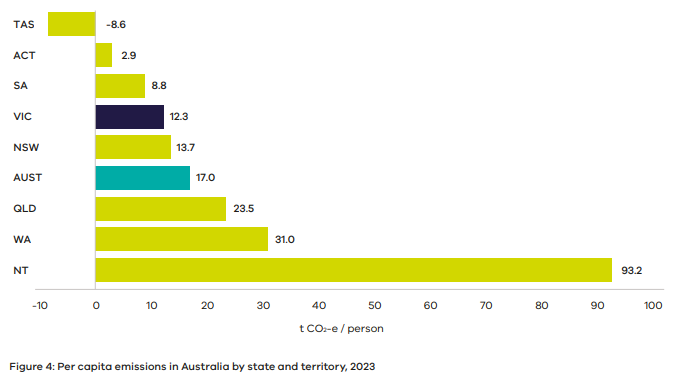
Victoria’s per capita emissions are falling. Since 1990, this has dropped by 69%, meaning that for every dollar of economic activity, Victoria is releasing far less emissions.