Industry Update – October 2026

NEW HOME CONSTRUCTION

New Name Tops the List of Biggest Builder

A new decade, a new name tops the list of Australia’s largest home builders. The 2025/26 HIA Housing 100 rankings measure Australia’s largest residential builders by housing commencements. Sumitomo Forestry Australia (SFA), which includes Henley, Wisdom, Scott Park Group and Metricon, became the nation’s largest home building group with 8,038 starts, ending Metricon’s decade-long run as the top-ranked builder. SFA acquired a 51% stake in Metricon in November 2024. ABN Group and NEX Building Group were ranked second and third. Overall, the top 100 builders commenced 70,553 homes, up 9.4% on the previous year, driven mainly by detached housing growth and supported by RBA rate cuts. While the results demonstrate the industry’s ability to increase housing supply, HIA warns that weaker consumer confidence, higher interest rates and policy changes during 2026 may reduce commencements in 2027.

Key findings from the 2025/26 HIA Housing 100 include:

  • Accounted for 35% of the new home market
  • Detached starts increased 11% to 52,058, semi-detached starts increased 14% to 7,397, and multi-unit starts increased 1% to 11,098
  • SFA ranked 1st with 8,038 starts, followed by ABN Group (3,764) and NEX Building Group (3,585).


CARDINIA NEWSLETTER

Infrastructure Milestones

Cardinia Road Employment Precinct Structure Plan – unlocking new investment and employment opportunities.

New roundabout, Wedgetail Av – wetlands, shared path networks and grass frog habitat creates a quality gateway to Kaduna Business Park

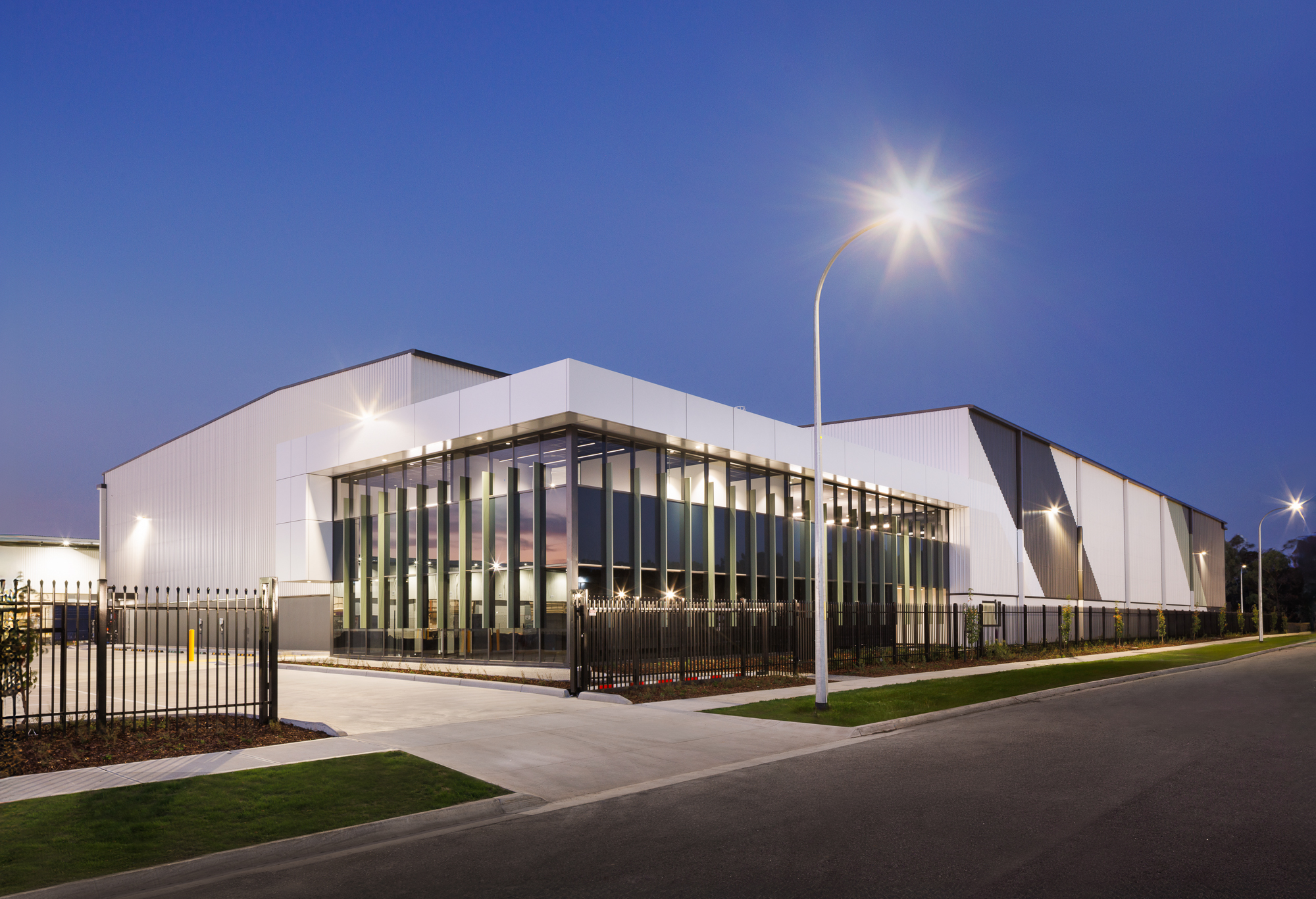
Axis Blvd & Centenary Blvd intersection – new roundabout providing access to ESR’s warehouse development, strengthening connections between Kaduna Business Park, emerging Banyan Place and Cardinia Road supporting efficient traffic movement through the precinct.

Approved planning permit for Costco in Pakenham (130 Greenhills Rd). 6.2Ha site at corner of Greenhills Rd & Koo Wee Rup Rd sits within Pakenham South Employment Precinct and is identified as State significant land.

New Developing Cardinia Program – developer funded service pathway, focus on innovation, quality assessments, partnerships.

Advocacy for 2025-29

  • Cardinia Life Regional Basketball & Gymnastics Stadium Redevelopment
  • Lang Lang Truck Bypass
  • Strategic Road Sealing Package
  • Public Transport Package
  • Parks & Open Space Package
  • Local higher education opportunities
  • Developer funded service encouages collaboration


WFH BILL BINNED

The work from home legislation has been sent to a parliamentary committee and the Premier has ruled out recalling Parliament to secure its passage prior to the caretaker period.

The government has ruled out any new taxes, but Victorians are wary about this promise. What industry needs are some impactful election commitments from all sides of politics to restore confidence: abolish Windfall Gains Tax as a downpayment for a tax reform roadmap; announce a new referral authority dealbreaker to create more accountability and to cut short impasses; and increase supply of genuinely developable land.


3 YEAR RESET

Victoria’s Housing Partnership

Current State & Local Government planning settings don’t adequately acknowledge the role these communities play in supporting housing choice, affordability and ageing-in-place outcomes. There is a clear opportunity to improve Victoria’s planning framework to be in line with LLC
outcomes by recognising Residential Villages as a Section 1 use in residential & the mixed-use zone. This would bring LLCs into line with residential aged care facilities and enable a residential use to establish in a residential area. This would reduce approval risk, improve delivery certainty and
better reflect the role of LLC’s in meeting an identified housing need.

Housing policy settings need to be reset:

  • No new or increased taxes
  • Reduce existing tax settings
  • Publish data with development bottlenecks
  • Link infrastructure spending & growth areas
  • 1 builder registration, 1 fee for skilled practitioners
  • Reform social procurement practices
  • Financial support for workforce pipelines
  • Provide a pipeline for modern methods of construction


FIGHTING CORRUPTION

Strengthened Powers for IBAC

The Carroll Labor Government has fast tracked new laws to strengthen Victoria’s public sector integrity agency.

The Independent Broad-based Anti-Corruption Commission (IBAC) Amendment Bill 2026 has passed the Victorian Parliament.

The new laws give IBAC the follow-the-money investigatory powers it needs to trace public funds.

It gives the agency scope to investigate the conduct of private and third-party subcontractors on Government projects.

The threshold of conduct IBAC can investigate has been lowered.

The definition now extends to serious disciplinary matters, including serious misconduct and conduct worthy of termination. This includes a specific provision for elected officials – Ministers, MPs and local councillors.

The new laws capture additional integrity reforms including:

  • Lowering threshold for convening public hearings, removing the exceptional circumstances provision
  • Legislated process for recruitment of IBAC Commissioners publication of IBAC’s budget requests a requirement for the Ministerial Code of Conduct to be published


EAST ABERLINE (WARNAMBOOL) STRUCTURE PLAN APPROVED

Amendment C217warr was gazetted on 6 October 2026, including the East of Aberline Precinct Structure Plan and Development Contributions Plan. The precinct in north-east Warrnambool is expected to eventually accommodate up to 15,000 people and 4,500 new homes, being the largest single expansion in the shire’s history. Warrnambool Mayor Cr Ben Blain said the area would allow for Warrnambool’s continued sustainable growth over the next 20 to 30 years.


VICTORIAN LIBERAL – NATIONAL PARTY PLAN

Reduce Crime – Lower Costs – A Government that works

A LNG will pursue the $15 billion funnelled to the CFMEU (via special task force ‘Wilson’). It will invest in more police/PSOs, tighten crime and bail laws and address family violence. It also has a 10-year plan to wipe out state debt, improve business conditions, restore energy security, freeze back office hiring. First home buyers will be exempt from stamp duty up to $1 million. It will scrap the emergency services tax, raise the land tax threshold back up to $300,000 over 5 years, scrap payroll tax for schools and the GP tax. $5 billion will be invested repairing our roads. It will restore growth area fast-track approvals, reinforce local planning controls/scrap the Activity Centre Strategy but expand the Capital City Zone. Unlock delivery of up to 50,00 homes in regional Victoria. CHMPs will require clear timelines and a schedule of associated costs fixed annually. Compulsory land acquisition laws will be repealed. VCAT appeal rights for major planning and infrastructure decisions will be reinstated. As will a 2km zone for wind turbines.

No new or increased taxes.

LNG’s contract with Victoria:

  • 10 year plan to wipe out state debt
  • FHB stamp duty exemptions up to $1m
  • Raise land tax threshold back to $300K
  • $5 billion, repairing roads
  • Growth Area fast-track approvals
  • Scrap Activity Centre Strategy
  • Reinstate major planning VCAT appeals
  • Target 50,000 new homes
  • Take CHMP reforms to the next step


MELBOURNE WATER

Updated Housing Roadmap

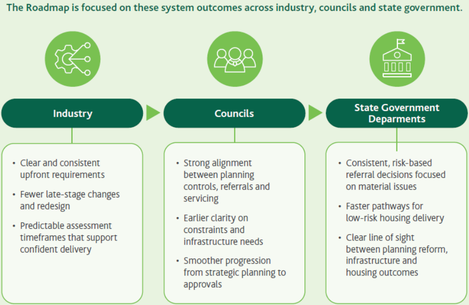
Developed in partnership with industry, councils and government stakeholders, including the Urban Planning and Development Strategic Collaboration Group, Melbourne Water’s Housing Roadmap 2026-2029 outlines priority actions to enable faster, more resilient housing delivery while effectively managing flood and climate risks. The Roadmap is structured around four pillars: smart risk-based approvals, flood and climate information that enables growth, unlocking complex greenfield areas, and enabling resilient inner urban communities.

Key actions include creating clearer and faster pathways for low-risk approvals, automating low-complexity assessments, expanding application guidance, improving transparency and reporting, modernising Development Services Schemes, making flood and hazard information publicly accessible, and strengthening planning frameworks that support housing growth in both established and emerging communities. The implementation approach prioritises fast-tracking low-risk approvals, coordinating decisions across the planning system, releasing updated flood controls and drainage models, and removing development bottlenecks.

Housing Roadmap since 2024:

  • Processed over 28,000 planning applications
  • Supported over 72,000 housing lots
  • Achieving 98% compliance with planning service standards since March 2025
  • Developed a flood-safe access approach for Southbank
  • Balanced floodplain management framework through revised Afflux Practice Note
  • Preparing the Greater Melbourne Flood Info Program (8 LGAs)


FOUR PILLARS:

  1. Smart risk-based approvals – improving internal planning systems and processes
  2. Flood and climate information that enables growth – providing and applying flood information
  3. Unlocking complex greenfield areas – improving processes and enabling innovation
  4. Enabling resilient inner urban communities – supporting flood resilience and housing delivery

INTERGENERATIONAL REPORT 2026-2066

Accelerating pace of change:

  • AI developing
  • Geopolitical Fragmentation increasing (conflicts risen from 2 in 2023 to 8 in 2025)
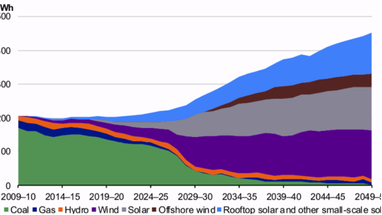
  • Energy transition becoming urgent
    • In Q2 2026, east coast gas prices were 26% lower than a year earlier despite conflict in the
    • Middle East contributing to price increases of 29% in Asia and 18% in Europe
    • Energy costs are expected to decline by 40% from 2030 to 2050 as households electrify,
    • with solar-power and vehicles reducing costs by around $4,300 a year.
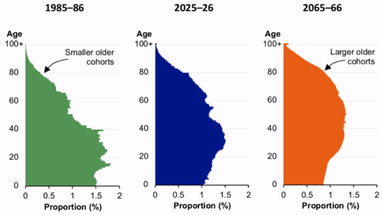
  • Population aging fast, accelerated by falling fertility rates
    • Deaths are projected to outnumber births by the 2060s
  • Industrial base evolving toward services influenced by AI
  • Intergenerational Equity
    • If home ownership rates remained at 1981 levels, around 250,000 more households aged 25–34 would own their own home.
  • Economy projected to be more than twice as large and income per capita 55% higher by 2065–66
Share Article

INDUSTRY NEWS

SHARING
KNOWLEDGE & INDUSTRY INSIGHTS