
NEW HOME MARKET
Absorbing Taxes & Rate Increases
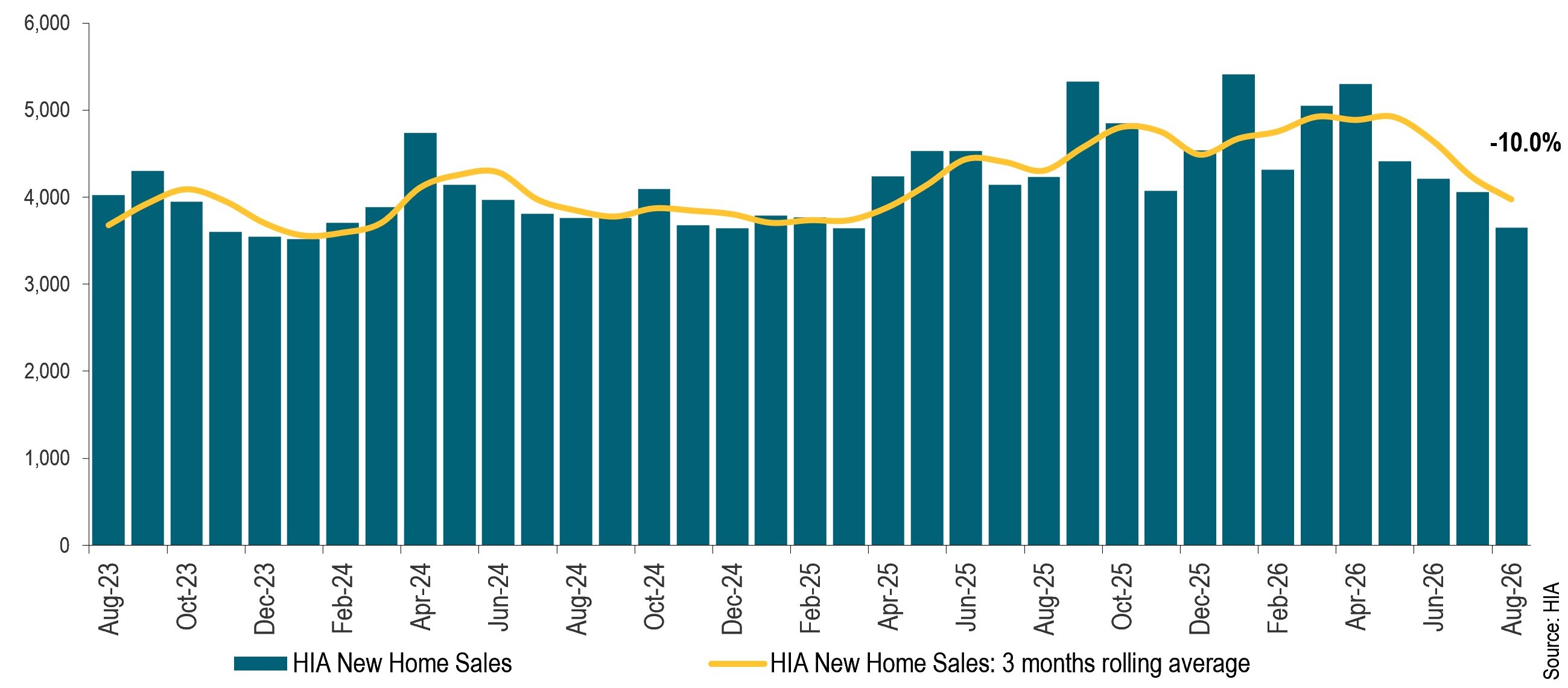
New homes sales declined (by 10%) in August for the fourth month in a row to its lowest in a year. The housing market slow down is to continue into 2027. This confirms that the recovery in building at the beginning of 2026 has been stiffled. Tax increases announced in the budget are providing uncertainty alongside having reduced household borrowing capacity and increased mortgage repayments. Punitive state stamp duties reamin a negator. Builders are reporting less traffic recorded through display sites, less enquiries and declining commitments alongside rising cancellation rates. The HIA says there was a large volume of work in the pipeline when the pressures emerged so the effects will not be immediately evident.
In the 3 months to August sales declined compared with the previous quarter:
VIC -27%
QLD -20.2%
NSW -17.5%
SA -10.8%
WA -8.2%
STAGGERING AMOUNTS OF INVESTMENT
Australian (data centre) business investment reached 12.6% of GDP in 2026 June Quarter. Australia’s mining sector, grew its capex by only 1.4% but continued to dominate overall figures, accounting for around a quarter of total business capital expenditure. Nearly all equipment used for data centres was imported, with automatic data processing machines and parts, including servers, GPUs and networking equipment, forming the largest category of imported goods in 2025-26. The category was valued at $23 billion, up 60% year-on-year, and was larger than Australia’s total annual imports of either freight trucks or telecommunications equipment.
Other industries that stepped up investment during 2025-26
ADMINISTRATIVE +17%
TRANSPORT +15%
HEALTHCARE +14%
RETAIL TRADE +12%
SUSTAINABLE DATA CENTRE ACTION PLAN
Department of Jobs, Skills, Industry and Regions
In August this year, National Cabinet agreed that large data centres require consistent, mandatory national standards covering energy, water and land‑use impacts. Identifying itself as an industry leader in sustainable data centre development, the Victorian Government has released this plan.
The plan is set around four enablers:
- Land Use, Location and Local Impact
- New Energy Supply and Grid Readiness
- Protecting Drinking Water and Securing Supply
- Victorian Jobs, Skills and Local Benefit
Many regulations are already in place from alternative pipelines that don’t need to be adjusted for data centres (Acoustic & amenity limits, Water infrastructure cost recovery, aboriginal cultural heritage, electricity connection costs, safety & fire regulation, planning enforcement toolkit). Associated legislative changes are unlikely to occur before Parliament recommences in 2027. Commonwealth legislation designed to complement state proposals is slated for release in 2027. The Minister for Planning serves as the responsible authority for data centre applications progressed through the Development Facilitation Program (DFP). All other applications remain under the jurisdiction of the relevant municipal council.
TRANSPARENT ASSISTANCE
- The Investment Front Door is a concierge government service for major data centre investments
- Pre-application information / early feasibility gives proponents greater certainty
- There has been regulator consultation and input
- Servicing capacity will be mapped and regularly updated
- The Investment Coordinator General is the escalation point for projects of state significance
- A Local investment Guarantee case will be presented by government on behalf of the proponent
IMPACT REDUCTION
- Prohibited on residential zoned land, 150m buffer between a residential building and proposed data centre building
- Prohibited in rural zones unless located near & able to be serviced by infrastructure critical to data centre operation (transmission, substations, renewable energy, battery storage, recycled water)
- Statewide planning policy will guide location, design, scale and infrastructure requirements (including updates for landscaping and environmentally sustainable design)
- Development must meet local planning approval requirements and have a Traffic Management Plan
- A planning scheme amendment will extend mandatory referral to EPA, WorkSafe, VicGrid, FRV & urban water corporations
- There are two mandatory public notifications (including First Nations People) through existing planning notice requirements and also through the EPA’s Development Licence application process
- Statewide industrial/commercial noise limits apply; nighttime limit of 55 dB(A) anywhere in Victoria Restrict backup diesel generation to emergencies and mandatory testing
PROTECTING DRINKING WATER AND SECURING SUPPLY
- Where recycled/nondrinking water isn’t available, plan with water corporation to offset interim drinking water use.
- Proponents must fully fund any dedicated infrastructure upgrades required for largescale water use Tap into Melbourne Water’s ability produce the largest volume of Class A recycled water in Australia for industrial use
LOCAL JOBS
- It will be expected that the sector maximise opportunities to support Victorian jobs, skills and training
FUTURE ACTIONS
- Location, siting, design and builtform guidance to be developed with stakeholder input, 2027
- Commonwealth legislation on data centre energy, water & landuse standards, early 2027
- Energy & Climate Change Ministerial Council to consider National Electricity Market rule changes
- Commonwealth to legislate AI training conditions in early 2027
- Local Investment Guarantee to be developed with local government sector & industry
- Water efficiency standards (dWUE) to be reviewed and updated annually
- Government to publish sectorwide construction and ongoing employment figures
NEW HOME MARKET
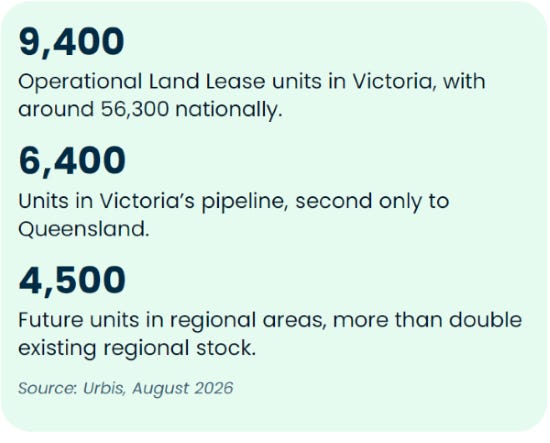
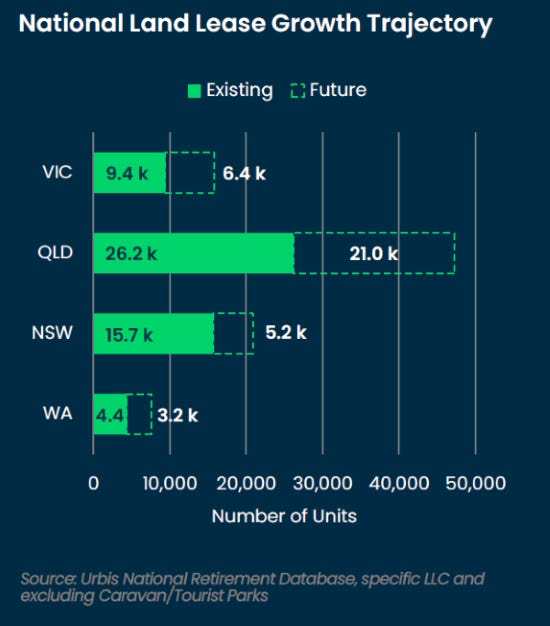
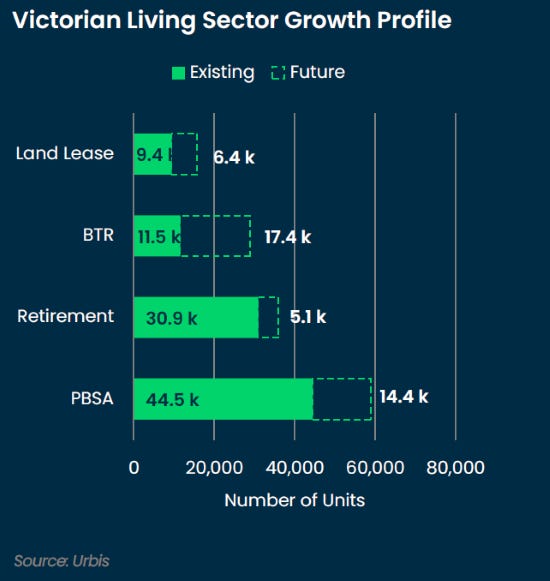
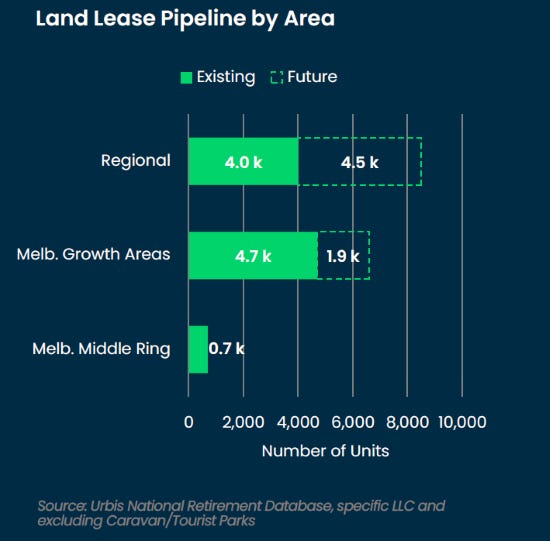
Current State & Local Government planning settings don’t adequately acknowledge the role these communities play in supporting housing choice, affordability and ageing-in-place outcomes. There is a clear opportunity to improve Victoria’s planning framework to be in line with LLC
outcomes by recognising Residential Villages as a Section 1 use in residential & the mixed-use zone. This would bring LLCs into line with residential aged care facilities and enable a residential use to establish in a residential area. This would reduce approval risk, improve delivery certainty and
better reflect the role of LLC’s in meeting an identified housing need.
MELBOURNE WEST NEW SUBURB
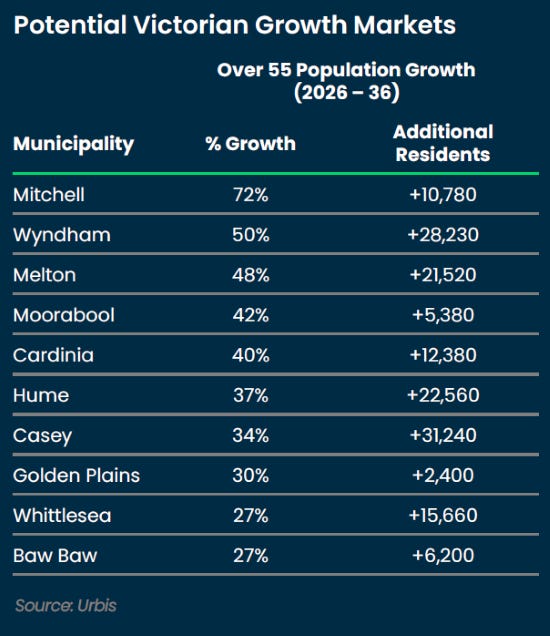
Sonya has approved the Melton East PSP to be developed over the next 20-30 years. Will provide 12,000 homes, 7 schools and more than 5 MCG’s worth of parks & reserves. Will be home to more than 36,000 residents and support roughly 1,600 jobs. 3 new arterial roads, 14 intersections & 5
bridges. This will be delivered in 2 stages. Already Labour has upgraded schools and roads across Melton, as well as having the Melton Hospital under construction. Consultation is now open for the draft Merrifield North PSP – unlocking more than 4,700 jobs
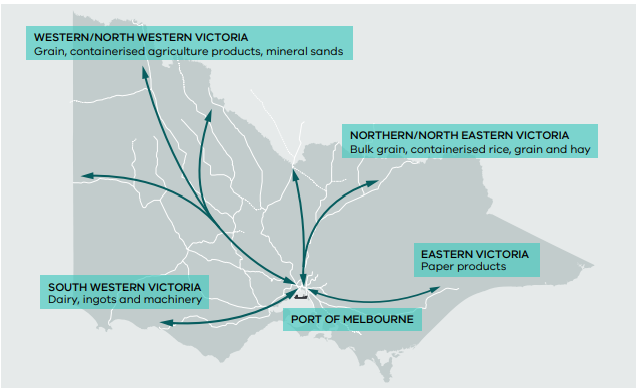
NEW RAIL FREIGHT
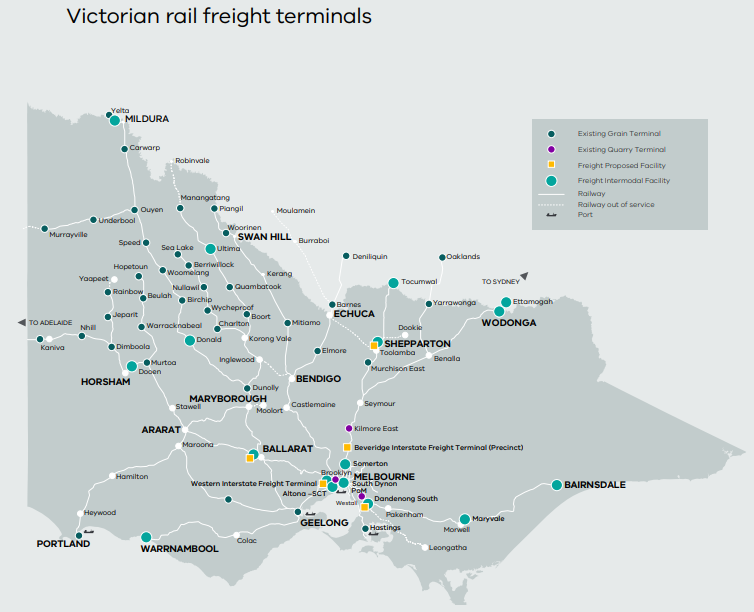
Aims to improve capacity, resilience and efficiency, while supporting decarbonisation. The network is expanding, Salta Properties is
starting construction of its Inland Freight Terminal in 2027. The Dandenong South Terminal will become Melbourne’s SE Hub for the
Federal & State Governments’ $58 million Port Rail Shuttle Network.
“The Victorian Rail Freight Plan aims to strengthen the freight sector as the economic engine for Victoria, supporting more jobs across the state. Melissa Horne.”
INDEPENDANT REVIEW
Victorian Public Service Sector
Focused on waste, efficiency, entity consolidation, returning nonfrontline services to pre-pandemic share of employment and ensure families have access to essential health, housing, education, transport and community safety. Proposals: set financial management principles, active pursuit of
improved data sharing, reset size and structure of VPS, reduce and streamline public entities, staged model to digitalise repeatable transactional services, reforms to release ongoing savings. Gov. Response: Plans to implement all recommendations other than those that affect frontline workers. This will save $4 billion.
Reduce:
Executive roles by 332 ($359M)
Amount of VPS5&6 roles ($125M)
Duplication in Gov. entities
Half the regulators
FEDERAL BUDGET
Impact on BTS Apartment Market
Expected to discourage investment and reduce new apartment supply. Restrictions on SMSF lending are particularly concerning, as
SMSF investors are 20–30% of off-the-plan apartment buyers in Melbourne & Brisbane. Private credit sector, is also affected as limited transparency is delaying necessary market corrections. In contrast, Latent Defects Insurance (LDI) and iCIRT rating system should improve confidence in apartment quality. Demand is strong, but higher interest rates, construction costs, and reduced borrowing capacity continue to constrain buyers. Limited new supply until interest rates stabilise and the reforms are fully legislated.
Most significant tax changes in the past 30 years Many developers, financiers, owner occupiers and investors have adopted a “wait and see” approach until these changes are fully legislated.