
HOUSING SUPPLY CRISIS
UDIA State of the Land Report 2026
Housing supply crisis to get worse in 2026. New house and multi-unit supply remain below required levels to meet target. Likely total national dwelling shortfall of 380,000 over the next 5 years (76,000 p.a. short). These figures do not account for the unfolding crisis in the middle East for oil, fuel, plastics, steel.
Victorian Greenfield sales for detached housing increased by 50% (11,151 lots) off a near record low base in 2024. Current sales remain 44% below the 10-year average (16K). Between 2022-2025 the median lot size has remained ~350-360 sqm and price ~$400,000. Positively, first home buyer demand in Victoria leads the nation. While the Victorian Government’s annual target is 70,685 dwellings completions, the 2026-27 forecast is 36,000
NAVIGATE MULTIPLE STRUCTURAL CONSTRAINTS
- High construction costs
- Skilled labour shortages
- Limited development ready land
- High development holding costs
- PSP annual lot release target is 18,000, subject to Government support
- Established home price growth remains stagnant, impacting greenfield lot price
30% INCREASE IN BUILDING MATERIALS & FREIGHT
Tens of Thousands of Homes at Risk
Diesel up 36% – Petrol up 30%
The Iran war fuel crisis is sending costs for building materials and freight soaring, putting tens of thousands of construction projects across the country at risk.
Metricon is largely insulated from cost pressures due to 12 month fixed price contracts with customers and suppliers. Metricon has more than 5000 projects currently in its pipeline, with “strong interest” remaining in the last two weeks. Metricon is happy to absorb rising costs for smaller suppliers who are most at risk in order to keep supply chains moving.
Effects on prices (particularly diesel), building materials (through fuel levies) and oil/resin-based materials.
Oil is used to manufacture plastics, and Australia imports most plastics meaning higher fuel prices are impacting costs of getting it.
36% increase in price for HDPE pipe and fittings.
31% increase in Twinwall Corrugated Stormwater Pipe and Fittings.
28.5% increase in PVC Pipe and Fittings.
Additional 3-30% fuel levies to get these products to site.
Rising costs could delay/cancel projects altogether.
7.1% of road freight businesses closed last year (one of the most stressed sectors in the economy). Economists are forecasting inflation back above 5% when the March figures are released.
CEMENT CRISIS
- Imported prices up 15%
- Local prices up 10%
- Freight costs up 12%
- Impact of an additional $500,000 per month
- Customer order cancellations not calculated
- “Never seen anything like this (cost escalation) in 30 years”
REECE GROUP
- PVC pipe up 28%
- HDPE pipe up 36%
- Twinwall Corrugated Stormwater Pipe up 31%
METRICON
- 5,000 projects in the pipeline largely protected by fixed price supply contracts
- Will absorb some cost increase from small suppliers to keep them solvent
- Pay trades weekly and seeking longer credit terms
MORE PARKS & HOMES IN SOUTH EAST
Approved to Transform George St Quarry
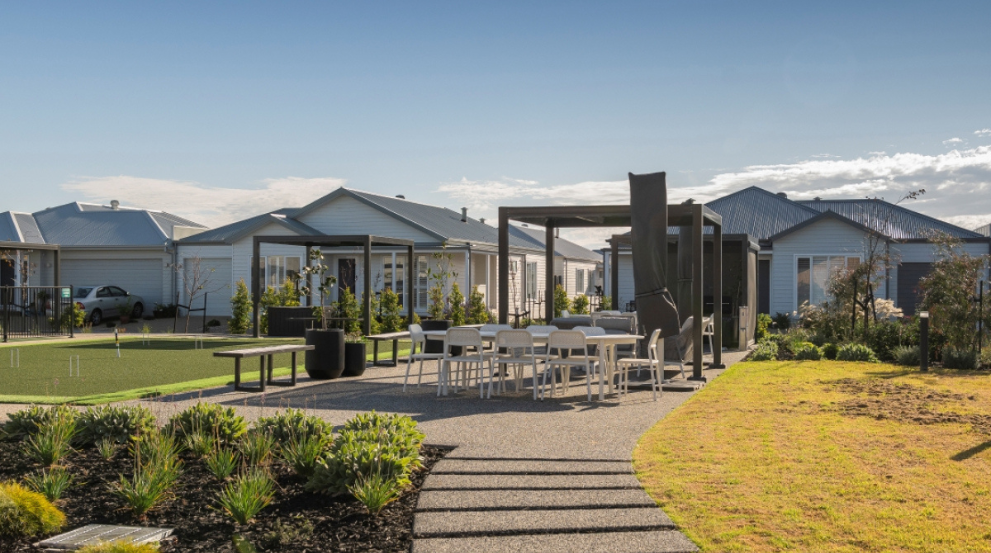
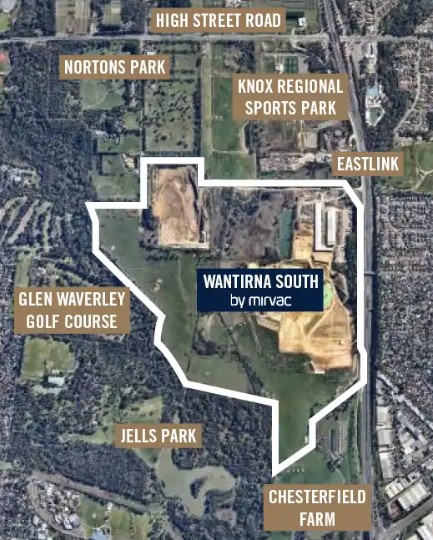
Mirvac will convert George Street Quarry (Wantirna South) into a community of 5,000 people through 1,750 new homes
alongside 80 hectares of green spaces (parkland, cycling links, new roads). The works will occur over 10-15 years, including an expansion of Dandenong Valley Parklands.
STAGE 1:
- Begin to build 300 homes in early 2027
- Develop new sporting/recreation facilities (2 ovals, sport pavilion, playground, cricket nets, walking trails)
BUSES, TRAINS, BICYCLES
Connecting Victoria to more Opportunities
Infrastructure Victoria has recorded a webinar discussing better integration of public transport to get Victorians moving. Victorians take >16 million trips on public transport daily.
Key recommendations for government:
- Disability accessibility ($1.5 billion upgrade)
- Expand tram networks, enabling less carparks needed in rezoned development areas
- Expand buses with easy-to-follow routes (main roads).
- Upgrade bus stops, increase the timetable
- $5.5-$7.5 million upgrade
- Make off-peak hours transport cheaper
STAGE 2 – ACTIVITY CENTRE PROGRAM
Encouraging Infill Development
Labour has released final planning controls for 25 train and tram zones within inner and middle ring suburbs. Encouraging infill development in areas with existing public transport connections, jobs, education and services. Heights from 6-20 storeys permitted within “core of zone areas”. Townhouse and low-rise for surrounding precincts.
MID RISE CODE
Amendment VC300 mid-rise code comes into effect 16 April 2026. Mid-rise projects that meet a set of “deemed to comply” standards are eligible for streamlined approval. DTP will
prepare Guidelines similar to the Townhouse and Low Rise Code.
CONSTRUCTION MARKET UPDATE RLB
Melbourne: Tender Prices up 4.0%
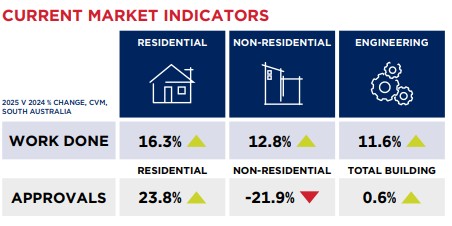
Construction activity in Melbourne is elevated, driven by non-residential and engineering projects. Strong activity in data centres and education is helping keep the market busy. The public share of total construction has risen significantly in recent years, from about 15% of total work done in the mid-2010s to a peak of almost 29% in 2024 (nationally).
The impact of the Victorian Government’s policies to boost the supply of medium-density housing and apartments has yet to materialise. Even once all policies become law, a short term pick-up is unlikely, as these projects will struggle to meet financial hurdles.
Key Factors Impacting Escalation
- Ongoing shortages of skilled & lower-skilled labour
- Strong public sector activity in social & affordable housing & Infrastructure
- Increases in the cost of doing business, including state-based taxes
- Limiterd Teir 1 subcontractor pool
VPA 2025-26 BUSINESS PLAN
6/21 priority projects completed as of 31 May 2025
Finalisation imminent for:
- Ballarat Infrastructure Growth Alignment Framework
- Corio Norlane Urban Renewal Opportunity Statement
- Gunns Gully Road GAIC WIK
Nine Horizon 1 plans actively been worked on (SE):
- Devon Meadows, Cardinia Creek South Pt2, Croskell, Casey Fields South (no timeframe updates).
- Commencing Clyde South and Derrimut Field (Horizon 2).
- Third party funding at $19.8m up from $5m last year causing concerns about developer obligations
2025-26 the VPA has been directed to:
- Continue 9 Horizon 1 plans
- Continue planning Merrifield North (Horizon 2)
- Start planning Clyde South & Derrimut Fiels (both Horizon 2)
- Limited details on Horizon 1 projects, including timelines reinforcing industry concerns and uncertainty of greenfield land supply
- Funding outlined in the business plan raise concerns, $19.8 million in third party funding collected form landowners covering project delivery costs as a formal revenue line item.
- Developers are being asked to underwrite future growth area planning, without additional transparency/accountability to delivery timeframes
Experience with Melton East PSP highlights risks of this approach. The funding agreement was highly one sided, and the value proposition for landowners was questionable. Following this concerning precedent, we’re pushing for better funding equity, transparency & government accountability for PSP development & delivery. Further scrutinising assumptions & commitments in the VPA’s Business Plan against a broader government commitment to deliver 18,000 greenfield lots per year.
UDIA COMMENT
While framed as a forward looking document, the plan raises substantive questions about the delivery of the government’s 10-year plan for Melbourne’s greenfields, positioned as a key mechanism for delivering the Government’s Housing Statement
CKK STATE OF THE MARKET H2-2025
Combined BTS/BTR Apartment Supply
BTR projects are forecast to deliver more than half of all apartments in Melbourne in 2026, highlighting the feasibility issues that continue to hinder BTS projects. A substantial failure to meet underlying demand remains. For new medium and higher density housing supply to be financially viable, established detached house prices must reach levels that support these forms of more compact and affordable housing. Over the past five years, cities such as Brisbane, the Gold Coast, Perth and Adelaide have experienced strong and sustained growth in established house prices. This growth has lifted realisable revenues for new dwellings and in particular made apartment development increasingly viable. Realisable revenues for new dwellings in Melbourne remains below the current cost of delivery, rendering new supply financially unfeasible.
VICTORIAN CONSTRUCTION PIPELINE
$405bn pipeline won’t deliver enough housing.
Victoria is set to tackle a $405 billion construction pipeline at the end of 2030 FY, the envy of other states. The forecasts precede the latest interest rate hike and the Iran conflict. The Herald Sun understands builders are now grappling with $8-$10 levies per cubic metre of concrete, $100-$200 on steel deliveries, and even a $4-$6 surcharge per tonne of rubble and soil.
Victoria is on track to only build 283,000 homes of the 307,000 it should to reach towards the 1.2 million Housing Accord target. It means the state will have to increase construction by about 15 per cent over the rest of the timeline. According to Master Builders a maximum of 48% of new homes coming from units and apartments in any year between now and the end of the decade.
“State planning hopes of a 70-30 split favouring apartment and townhouse development in established suburbs over new housing estates will be completely missed”, says Master Builders Victoria Chief Executive Michaela Lihou. At present just 32% of new home construction is for higher density, compared to 55% for detached houses and 13% for renovations.
All Construction Forecast for Victoria 2025/26
Total: $80.4bn
Residenital: $32.9bn
Non-residential: $22.1bn
Civil engineering & construction: $25.4bn
Victoria 2029/30
Total: $78.9n
Residenital: $33.7bn
Non-residential: $20.6bn
Civil engineering & construction: $24.5bn
70/30 target to be more like 40- 60 according to Master Builders Victoria
GOVERNMENT REZONING PRIVATE PROPERTY
Court Order Compensation $27.9m
Land zoned for rural use in 1981, was partly rezoned for Regional Rail Link, the Metropolitan Ring Road and Grasslands Reserve in 2010 with a Public Acquisition Overlay. The Victorian Government offered $0 compensation. In 2021 Wyndham Council refused a development application by the landowner due to the PAO. The owner made a Supreme Court compensation claim based on the permit refusal and losses linked to the PAO for a total of $31 million. After negotiations the Court ruled the landowner be entitled to receive $27.9 million.
GUIDELINES TO ASSESS FLOOD IMPACTS UPDATED
Developed practice note providing guidance on managing offsite flood level impacts for proposed developments. “Risk based flood impact assessment framework”
Demonstrating that zero afflux cannot be reasonably achieved, new guidelines help further asses the application:
- Better understanding of a developments flood risk profile
- Provide general advice on flood risk management
- Procedure to evaluate flood impact
- Assess factors
- Determine acceptable flood impact tolerances
Development must not compromise natural function of the flood plan and avoid:
- Flow diversion
- Increased flood velocity
- Increased flood levels
- Loss of flood storage
Developers need to provide evidence of their compliance to these in order for their application to be approved.