Industry Update – July, 2026

RPM greenfield market report

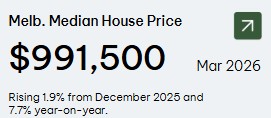
In Victoria to buy a house you need roughly 45% of average income to service a mortgage where as in Sydney you need 68%.

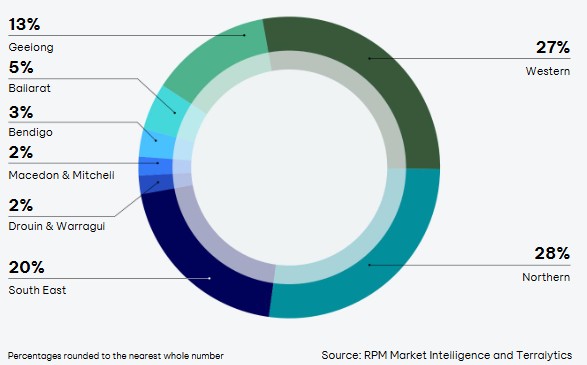
WESTERN GROWTH CORRIDOR = 937 lot sales in Q1 2026 down 40% from Q4 2025

NORTHERN GROWTH CORRIDOR = 981 lot sales in Q1 2026 down 29% from Q4 2025

SOUTH EAST GROWTH CORRIDOR = 688 lot sales in Q1 2026 down 31% from Q4 2025

GREATER GEELONG = 471 lot sales in Q1 2026 down 10% from Q4 2025

BALLARAT = 174 lot sales in Q1 2026 down 28% from Q4 2025

BENDIGO = 100 lot sales in Q1 2026 down 30% from Q4 2025

MACEDON & MITCHELL = 78 lot sales in Q1 2026 down 5% from Q4 2025

DROUIN & WARRAGUL = 86 lot sales in Q1 2026 down 21% from Q4 2025

These pullbacks are being put down to the two consecutive RBA rate hikes in February and March and broader deterioration of household consumer confidence.
WARRACKNABEAL ENERGY PARK

Signed off ESS

Minister for Planning signed off on the ESS for the Warracknabeal Energy Park. This will be the largest wind farm in the Southern Hemisphere.

219 turbines will deliver more than 1.5 gigawatts of renewable energy once complete, this can power 1.2 million homes. Will work to generate 12.5% of the entire states future energy needs.

Will create 950 jobs. There still remain a few approvals before final decisions are made. Assists in working towards Victoria’s goal of renewable energy targets of 65% by 2035.

  • Biggest windfarm in the southern hemisphere generating 12.5% of the state’s entire energy needs
  • 219 turbines, 1.5 gigawatts, powering up to 1.2 million homes
  • Significant project milestone with the Environmental Effects Statement (EES) approved
  • Still requires Commonwealth approval

Oliver Hume Market report Q1 2026

What greenfield projects need to succeed.

Greenfield markets are under increasing pressure to ‘standout’ and respond to consumer needs. Location, affordability, lot size/availability remain the top purchasing drivers. More than 80% of purchasers have “average to strong” knowledge of the area, while around 70% have two or fewer estate visits. Purchasers aged 33–55 accounted for ~80% of buyers, while First Home Buyers remained the largest buyer cohort at ~40%.
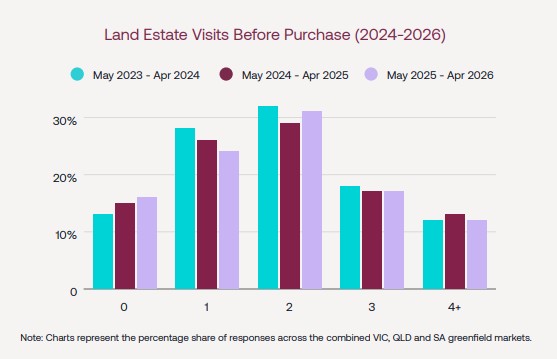
With buyers having fewer estate visits and relying more on digital and referral channels, projects will need to communicate product suitability more efficiently through interactive digital tools.

UDIA

Rethink of 70/30 Policy

UDIA released research regarding costs associated in developing throughout greenfield and infill settings. Concluded that it is only cheaper to build in existing areas if there is latent capacity. There is no way of knowing what this capacity is. Housing and density targets are aligned to transport centres needing further examination. If Greenfield markets are delivering 50% of new housing is the 70/30 focus currently relevant? David Southwick announced the Coalition would scrap the 70/30 target letting the market and community decide the type of home they would like to live in and where.

  • Policy has moved ahead of the infrastructure, fiscal, planning and market settings required to support delivery

  • Reforming property taxation reduces the cumulative fiscal burden suppressing growth aspiration

  • Prioritising enabling infrastructure aligns investment with where housing is planned

CHMP PROCESSES

Monitoring, Evaluation & New Facilitator

Cultural Heritage Management Plans are consistently one of the most significant challenges. Over the last 10 years CHMP processes being lengthy and complex have contributed to high costs and delays across a range of projects. UDIA is committed to supporting a system that maintains its integrity and continues to command public confidence. The system must balance protection of Aboriginal cultural heritage with the responsible development and infrastructure delivery required to support Victoria’s record growth.

New guidelines aim to form consistency, timeliness and efficiency. New monitoring and evaluation regime to assess adherence to guidelines to track the impact and provide evidence supporting the need for future action.

  • UDIA continues to press for urgent Cultural Heritage Management Plan reform
  • Government appoints an Executive Director of CHMP Reform
  • A member nominated significant constraint to land development, along with taxes, water and drainage
  • Calling for concierge, acceleration, set fees/timeframes and improved inductions

GROWTH CORRIDOR & REGIONAL DEVELOPMENT

PSP Funding & Fast-Tracking

State Budget called out $15.6 million for planning of the next section of PSP’s in the 10 year Greenfield Supply Plan although Government’s intention is to rely on third-party funding for the majority of this.

UDIA is trying to secure adjustments such as:

Cost equalisation, transparency about cost apportionment, realignment of third-party payment with delivery milestones, opportunities for cost recovery of contributions for discontinued PSPs, alignment of costs with prospective PSP delivery efficiency reforms and improved information sharing.

UDIA is also working to fast-track PSPs through:

Prioritising Net Developable Area in all PSPs, adopt appropriate housing density targets, mandate early completion of Drainage Schemes, apply reasonable approach to Cultural Heritage Management, align environmentally Sustainable Design and Intedgrated Water Management requirements, and co-design PSP staging plans with industry from the outset. This is an important step that establishes greater accountability of the delivery authority to proponents who are funding PSP preparation. UDIA’s expectation is that proponent funded PSPs are more efficient and economical.

  • Government set to heavily rely on third-party funding for next tranche of PSPs
  • UDIA is seeking concessions for proponent-funded PSPs, including:
  • A cost equalisation measure to share costs through existing mechanisms
  • Better transparency about cost apportionment in each new Agreement
  • Realignment of third-party payment with delivery milestones
  • Opportunities for cost recovery of contributions where PSPs are discontinued
  • Alignment of costs with prospective PSP delivery efficiency reforms
  • Improved information sharing including technical reports

STRONG AND RISING

  • Victoria’s business investment according to new ABS data is strong and growing, grew by 17.9% in the quarter 14.7% more over the year to March 2026, the March quarter recorded $2.8 billion in business investments across Victoria, the third consecutive quarter of record levels. Victorias State Final Demand increased by 0.9% in the quarter, the second strongest state in Australia. Victoria has the largest percentage growth of new businesses (19.6%) of any state, gaining +123,000 since 2020. 

According to Scale Suite, payday Super (starting July 2026), expected RBA rate increases, and ongoing ATO enforcement all create challenging conditions for businesses, particularly in construction and hospitality.

  • In the March quarter, business investment reached $20.8 billion
  • Business investment grew by 7.9 per cent in the quarter, 14.7 per cent higher over the year
  • Fastest growth in almost 5 years
  • Victoria has added more than 123,000 businesses since June 2020
  • Scale Suite says business insolvency nationally is expected to remain elevated through 2026-27


RATE INCREASE

Melbourne Water DSS

From June 2026, Melbourne Water will roll out updated DSS rates. Industry asked for increased scheme transparency, so MW have developed a five-tier rating system.

The breakdown of the tiered rating system is as follows:

  • Tier One – Schemes expected to have less significant rate increases in 2026 and beyond.
  • Tier Two – Schemes expected to have higher increases in 2026 with greater stability beyond 2026.
  • Tier Three – Schemes expected to require up to a 25% increase in 2026 and a further increase in 2027 before returning to a greater level of rate stability thereafter.
  • Tier Four – Schemes expected to require up to 25% increases in both 2026 and 2027, with greater rate stability not expected until 2028 or 2029.
  • Tier Five – Schemes expected to require up to 25% increases every year for at least the next four years.


victorian families

Lower Rents, Longer Leases
 

Victoria’s Affordable Housing Rental Scheme is lowering rents to 74.99% of market rent; or 30% of household income. Previously rent caps were set at 90% of market rent or 30% of the median household income. Eligible tenants must be on the Victorian Housing Register, with individuals earning up to $74,080 a year, couples up to $111,110 and families up to $155,550. Leases will be extended from 3 to 5 years. This rental reforms are linked to Labor’s $6.3 billion Big Housing Build and Regional Housing Fund.

$47 billion housing system rebuild

 
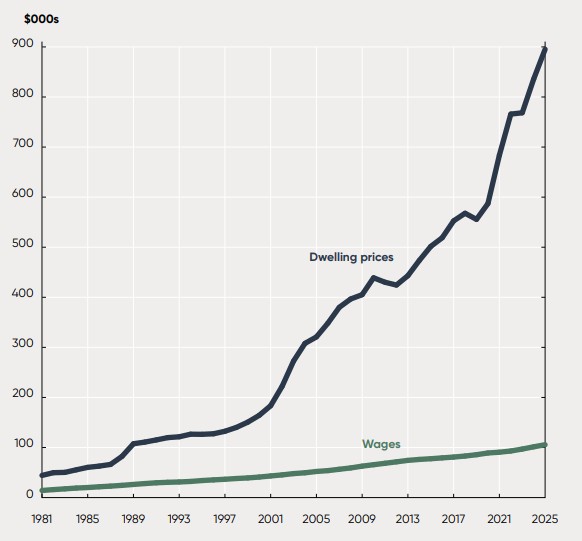
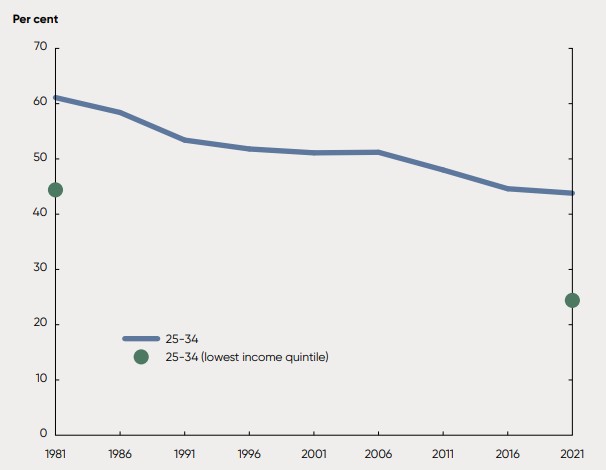
Since 1999, house prices have risen by more than 400% – more than twice as fast as average full-time earnings. Population growth, lower interest rates, real growth in household incomes, changing household patterns, and decreases in household sizes increased demand, while supply did not keep pace. Home ownership rates have declined, falling from 70% in 1981 to 67% in 2021. The time required to save a 20% deposit has increased from 7.1 years in December 2002 to 11.2 years in December 2025
 
  1. Building the homes Australia needs so housing becomes more affordable
  2. Levelling the playing field for first home buyers so more Australians can own a home of their own
  3. Making renting fairer and more affordable so renters can live in security and plan for the future
  4. Growing the social and affordable housing sector so more Australians have a stable place to call home
  5. Closing the housing gap in genuine partnership with First Nations Australians
  6. Supporting people experiencing homelessness, crisis, and family and domestic violence with a strengthened system


Earnings and dwelling prices since 1981
Home ownership rates for households aged 25-34
 

Share Article

INDUSTRY NEWS

SHARING
KNOWLEDGE & INDUSTRY INSIGHTS