
FEDERAL BUDGET TAX CHANGES
Melbourne property the big winner?
Realestate.com.au says Victoria’s real estate market could wind up a surprise winner after the biggest budget shake up to Australia’s property
market this century. Despite the labyrinth of property taxation changes proposed by Labour, experts suggest Melbourne is currently offering the best conditions to buy an investment since the 1990s. In recent times, Melbourne house prices have been hit by volatile interest rates, escalating taxes for Covid-debt recovery and maintained moderate
supply rates, making the city comparatively affordable compared to most other markets.
The big changes announced include limiting negative gearing to new builds after July 1, 2027 and established homes purchased after 12 May, 2026 will no longer receive a 50 per cent flat discount on CGT. RE says ‘rentvestors’ hoping to invest before buying their first home, and lowerincome investors including nurses and teachers, will be forced away from established entry level homes to pursue riskier property investments, given they will be taxed at least 30 per cent on gains and not be able to deduct annual losses.
Property Investor Council of Australia chair Ben Kingsley says “Melbourne is fundamentally undervalued compared to other capitals … our property values should be 20 per cent higher than they are. We will regain out status as the second most expensive city in the country, it’s just how long it takes.” Mr. Kingsley also said regional market pricing could turn positively geared more quickly.
In their reply to the Federal Budget, Leader of the Opposition Angus Taylor has pitched to cap Net Overseas Migration (NOM) directly to new housing completions in the previous financial year.
Negative Gearing
- From July 1, 2027, negative gearing is limited to income you
are drawing from rental properties, and you can’t deduct against your full income; - Homes bought after 7.30pm, May 12, can only claim negative gearing until July 1, 2027;
- Homes bought before 7.30pm, May 12, will have negative gearing grandfathered;
- Exemptions: commercial property, new builds, off-theplan purchases, homes bought as part of a Self Managed Super Fund;
Capital Gains Tax
- From July 1, 2027, the 50 per cent capital gains tax discount for investment properties owned for more than a year will be
replaced by indexation and a minimum 30 per cent tax rate - Inflation will be deducted from the capital gain, then any real gains left over will be taxed at your marginal tax rate — though not less than 30 per cent (not tax advice)
- Victoria has the highest property taxes, contributing more than 43% of tax revenue
- UDIA welcomed the extension of the off-the-plan concessions and infrastructure funding for growth areas
- Outlined a roadmap for Windfall Gains Tax, Absentee Owner Land Tax and Foreign Additional Purchaser Duty
UDIA
Victorian State Budget Commentary
The Urban Development Institute of Australia (Victoria) welcomed cost of living measures delivered in last month’s state budget but warned the lack of support for the housing sector would impact affordability.
“Not only does Victoria have the highest property taxes in the state, but parts of the housing construction industry are also facing an existential threat as costs escalate and there is
no recovery in sight,” said UDIA Victorian CEO Linda Allison. Budget papers reveal that this year, property sector taxes contributed more than 43 per cent of total tax revenue.
“It’s a basic economic concept: encourage new projects through a more favourable taxation environment” said Ms Allison.
OPPOSITION RESPONSE TO THE STATE BUDGET
Higher debt, higher taxes, higher interest repayments
Opposition leader Jess Wilson says Labor’s budget is fiscally reckless, increases the debt burden for Victorian’s, leaves projects with cost blowouts/delays and lacks a plan to grow the state economy. Ms Wilson says rather than the surplus referred to by the Premier, the budget results in a cash deficit of $7.7 billion and net debt increases tenfold by 2029-30.
“Under Labor, criminal offending is at an all-time high, it takes longer to get an ambulance today than it did 10 years ago, construction of new homes is at a decade low, roads are littered with potholes and at least $15 billion has been lost to corruption on major projects” says Ms Wilson. The leader of the opposition unveiled public service job cuts and a 10- year hiring freeze, excluding police, nurses, teachers, health care workers & firefighters to save ~$22 billion. The Liberal Nationals are pledging to lower payroll (down to 4.8% for metro businesses) and land taxes (reinstate the $50,000 threshold over five years, down from $300,000) and lift the stamp duty concession threshold for first home buyers to $1million.
The budget has confirmed that since 2014:
- Net debt has increased from $21.8 billion to $199.3 billion in 2029-30.
- Interest repayments have increased from $2.1 billion to $11.8 billion in 2029-30.
- Total tax revenue has increased from $17.9 billion to $50.2 billion in 2029-30. Press release link
The Liberal National’s will:
- Provide payroll tax improvements, including reducing the metro rate to 4.8%
- Reinstate the $50,000 land tax threshold over five years, down from Labour’s $300,000
- Conduct a comprehensive review of Victoria’s public service jobs, with the potential to save $22billion over 10 years
RPM VICTORIA
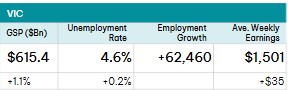
Job creation nationally has slowed in the past year, although Victoria has accounted for a third of all new employment growth.
In 2025 Q3 Victoria added 30,000 residents as Victoria accounts for 30% of Australia’s population growth, partly driven by rental affordability in comparison to Brisbane & Adelaide.
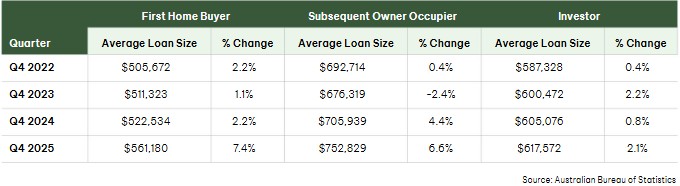
The Federal 5% Deposit Scheme was key to Victoria reaching 43,000+ new loans in Q4 2025. Investor loans pre-budget announcement reached a “record high” accounting for 36% of all loans written in Q4 2025.
Vic population = 7.1m
Median unit price = $656,500
UPDATED PUBLIC OPEN SPACE CONTRIBUTION RATE
Proposes to introduce a new public open space (POS) contribution rate, collecting funds to implement the Merri-bek Open Space Strategy (OSS). Plans to remove the individual suburban rates and replace with a city-wide levy rate of 8.68%. The Panel has reservations about whether all the input calculations are reasonable.
KEY ISSUES:
- Strategic justification and economic impacts for the new rate.
- If the methodology used is appropriate.
- Transparency around costs and contingencies.
Almost half of the projected additional 21,756 dwellings required to accommodate the future residential population between 2026 and 2046 will be delivered in designated activity centres. The Panel’s recommendation is to adopt the amendment as exhibited, subject to removing a 27% contingency cost.
Panel conclusions and recommendations:
- The methodology for calculating the POS rate is generally
acceptable as:- The principles of need and nexus are met
- Interrogation of the methodology is transparent
- Population forecasts are sound
- However council has failed to publish the detailed projected costings and contingencies to
inform the calculations - 27% land cost contingency using 29 property sales is insufficient
- Recommended to adopt the amendment as exhibited, subject to deleting the 27% contingency, resulting in a lower rate
DEECA GUIDELINES
Guidelines have been developed for businesses seeking to access large volumes of Victorian water, these guidelines will help businesses understand how to access and connect to water, sewerage and recycled water services, the requirements that need to be met and step involved in working with the local urban water corporation. Guidelines are designed for users who need more detailed servicing assessments, infrastructure planning and regulatory oversight.
Providing:
- Guidance on system performance, servicing, and regulatory requirements.
- Advice on managing demand, water efficiency and opportunities for non-portable water use.
- Support through a dedicated contact for large and complex applications.
- Templates, lists and technical documents supporting a highquality application
Large urban water users:
Industrial and commercial businesses and facilities that use more than 20ML/yr and are located within urban areas (e.g. data centres).
Users cover a spectrum of sectors central to Victoria’s economy (in addition to data centes), from manufacturing, food and beverage processing and advanced industrial operations, to hospitals,
laboratories, logistics hubs, commercial precincts.
Early engagement with water corporiations is encouraged. Guidance and pre- applicaiton material is available.
CLARKFIELD REZONING
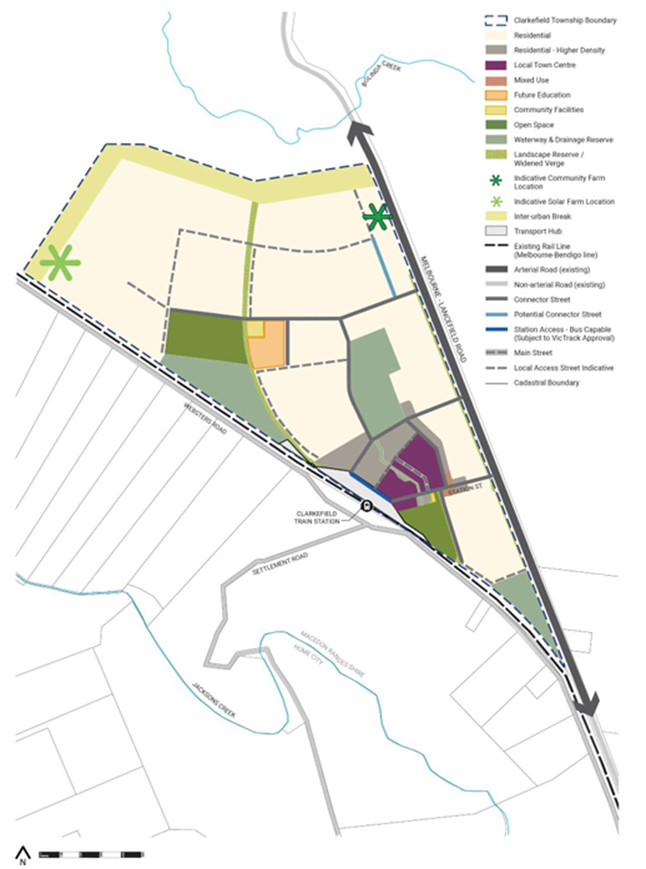
The draft amendment proposes to make changes to the Macedon Ranges Planning Scheme to implement the Clarkefield Expansion Strategy and the Clarkefield Comprehensive Development Plan,
facilitating the long-term growth of a new district town, Clarkfield, as part of the Victorian Government’s Development Facilitation Program. The proposal enables a mixed-use town centre and
approximately 2,300 new dwellings over the next 15 years, including affordable and key worker housing. Clarkfield is proposed to be the first ‘carbon natural town’ as the modelling implements a community solar farm and battery storage paired with rooftop solar on every home. The plan also has nearly all residents using train networks or walking because of the permeable road network.
- $700m ready-to-build town
- 40km NW of Melbourne CBD
- Located on Melbourne-Bendigo rail line
- 140 build-to-rent homes
- 20% open space
OFFSHORE WINDPOWER IN PORT OF HASTINGS
Victorian Renewable Energy Terminal
Victoria has some of the best offshore wind conditions world wide, making it ideal for Australia’s first offshore wind energy industry. The Victorian Budget is investing $124.5 million to
progressing Victorian Renewable Energy Terminal activities at the Port of Hastings. This will progress the Environmental Effects Statement (EES) process for the first heavy duty port of its kind in Australia. Providing opportunities to continue lowering prices of electricity as coal power stations close. This would allow companies to be able to assemble turbines before taking them offshore to install.
Victorian Renewable Energy
Terminal at the Port of
Hastings:
- Victoria already has the lowest wholesale electricity prices in the country because of renewable energy
- Auction for first 2 gigawatts will open in August and could power 1.5 million homes
- Expected to create over 2,370 jobs at its peak
- Advanced manufacturing to occur on site, including wind turbine components
VIC & SEQ GREENFIELD MARKET REPORTS
Melbourne’s greenfield
market retains a meaningful affordability advantage over established housing and other eastern seaboard markets, and government incentives and low deposit schemes continue to underpin entry-level demand. The trajectory of inflation and the RBA’s response to it will be the dominant variable shaping market outcomes through the second half of 2026.
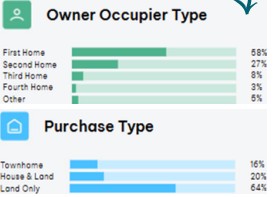
High ‘first home buyer’ and ‘land only’ proportions.
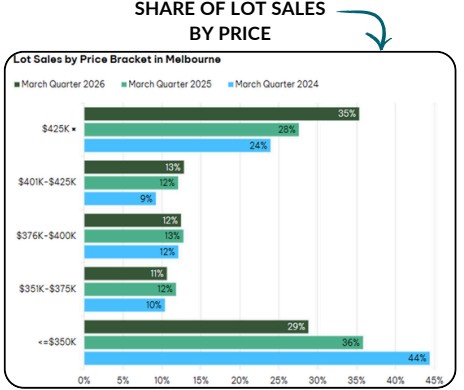
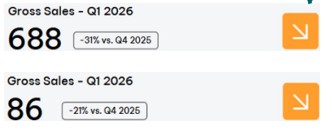
A year ago we got told these corridor land sale prices were too similar to make D&W enticing. This looks pretty sparse to me! SEC has remained steady while D&W has fallen ~33% since Q2 ‘25.
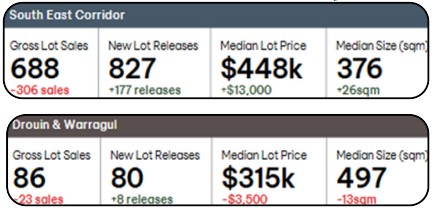
This is not a good trend. If Q2 falls again that will be 3 consecutive falls for both markets.